
When Your Educational Plan No Longer Fits
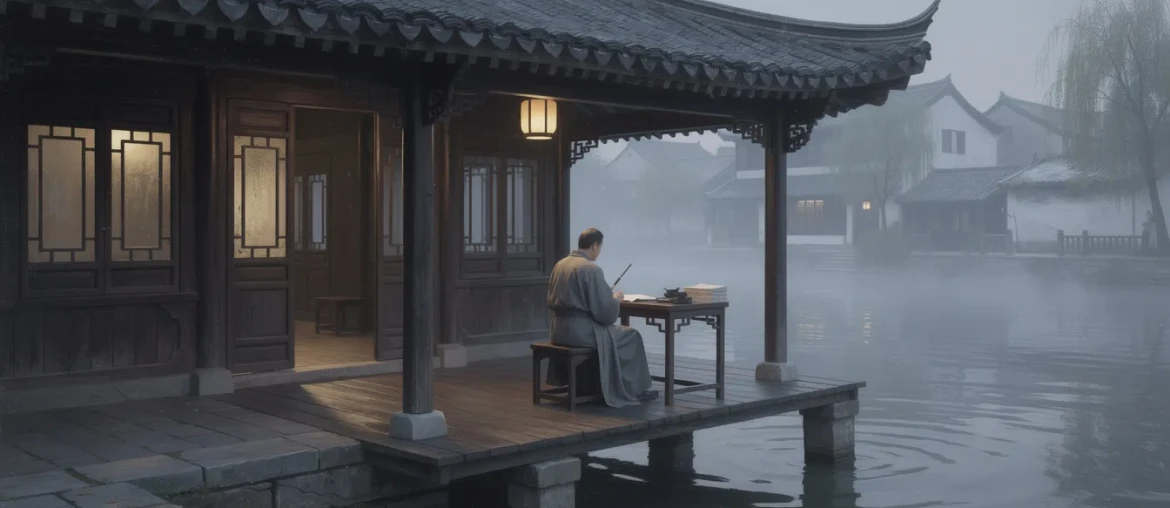
The essay has been at 340 words for several days. The deadline is nine days away, and the real decision is not about finishing it but whether the course was ever truly yours.
That question is uncomfortable because it arrives without a deadline of its own. You can carry it for a whole term, writing paragraphs, attending seminars, and never once sitting down to answer it. Here's how to sit down and answer it, with a cast as one of the tools on the table.
The plan you made at eighteen was based on limited information
At eighteen, you chose a course using a prospectus, a ranking, a parent's opinion, and the one subject you happened to excel in during a single exam season. This is not a character flaw; it is a decision made with limited data.
Years later, you possess data the eighteen-year-old did not have: what the work feels like on a Wednesday afternoon, what you will do without being paid, what you cannot stand doing even when you are paid well. When the plan you chose at eighteen stops fitting, the useful question is not whether you are a quitter. It is whether the plan has encountered evidence it was never designed to survive.
Write three lines before you cast anything
The cast is the last step, not the first. Open a note and write three sentences.
Line one: what you chose, and the reason you gave at the time. Not the polished reason you tell relatives, but the one you actually had.
Line two: what has changed. A number, a person, a bill, a subject you now dread. Something you can point at.
Line three: what you would choose today if you were starting from scratch with the same money and the same amount of time.
If line three matches line one, you are not deciding whether to stay. You are deciding how to survive a hard term, which is a smaller and more solvable problem. If line three is a different sentence entirely, you already know, and the cast is about how to move rather than whether to.

Photo: Võ Văn Tiến Then word the question. "Should I quit university" is a yes or no question, and a yes or no question gives you a coin, not a reading. Ask instead: what should I understand about the next twelve months of this course? Or: what am I not seeing about staying? One question, present tense, about your own conduct rather than about a verdict.
After the cast, write the answer down in full and leave it alone for a day. The test of a reading is not whether it felt true at the time. It is whether it changed what you did on Tuesday.
Three hexagrams that come up in this exact spot
Difficulty (Hexagram 3) is the hexagram of a beginning that is genuinely hard. Its judgment says, in James Legge's translation, "Action should not be undertaken lightly, and it is wise to seek help." If you receive it, the reading is not telling you to stay or go.
It is telling you the move you are missing is a person: a tutor, a department advisor, someone who finished the course or left it, and who will describe what the middle years were actually like. Most people deciding alone are deciding with half the information.
Controlled Power (Hexagram 26) puts study inside a larger frame. Its image has the superior man studying the words and deeds of earlier people in order to build his virtue, which is a way of saying that study is accumulation, not identity. If this one comes up, the question shifts from "is this the right degree for who I am" to "what am I actually accumulating this year," and that second question can be answered on a Tuesday.
The Turning Point (Hexagram 24), often called Return, is the hexagram of coming back. Its judgment speaks of goings and comings that are unimpeded, and of an advantage in choosing one's path. In practice, receiving it means a return is available: to a subject you dropped, to a method that worked two years ago, to a version of the plan you can still use.
The image has kings closing the passes at the winter solstice, which is a reminder that a deliberate pause before moving is part of the movement, not a delay of it.
Ten minutes, one page, no decision
- Write the three lines: what you chose, what changed, what you would choose today.
- Cross out every reason that is really someone else's opinion.
- Circle the one fact you have been avoiding.
- Set a ten-minute timer and do the smallest real piece of the work: open the reading, write one paragraph, book one appointment.
- Write your question in one sentence, present tense, about your own conduct.
The purpose of the ten minutes is not to make a decision, but to put your thoughts on paper so you can evaluate them. People often feel stuck because they haven't clearly defined the questions they need to answer.
What a reading can and cannot do here
The I Ching serves as a tool for reflection. It neither predicts outcomes nor substitutes for professional advice from tutors or counselors. What a cast can do is put your own reasoning in front of you in a form you have to answer. Treat the result as a question you now owe an answer, not a verdict you have to obey.

Blog
Should I quit university?
Separate quitting a course from quitting a field. Liberation (Hexagram 40) treats an unfinished operation as something to complete quickly rather than leave open, which in practice means leaving at the end of a term with a transcript rather than in week six with nothing. Before you do either, run the Difficulty step: talk to one person who left and one who stayed.
Am I too old to study?
Inexperience (Hexagram 4) is not about youth, despite the name. Its judgment has the student seeking the teacher, and it says the one who asks with sincerity gets instructed. Age shows up in the calendar, not in the classroom: the real constraint is hours, not memory. Count the hours you actually have before you count the years.
Which subject should I study?
No cast will choose a subject for you, and one that appears to is usually answering a different question. Contemplation (Hexagram 20) makes the point that preparation is not the offering; the worshipper still has to bring the sacrifice. Take your two candidates and write down what you would read on a Saturday with no exam attached.
The subject you return to without a deadline is the one that survives the third year.
How do I find the motivation to study?
Stop aiming at motivation and aim at a method. Consistency (Hexagram 32) has the superior man standing firm without changing his method of operation, which describes a schedule rather than a mood. Pick one time of day, one desk, forty minutes, and the same opening ritual. Motivation follows the third session, not the first.
Will I pass this exam?
The reading does not forecast grades, and an answer that claims to is not a reading. Unfinished Business (Hexagram 64) is the useful hexagram here: the fox that has nearly crossed the stream gets its tail wet, which is about the last stretch rather than the first.
In practice, the final week is a scheduling problem. List every topic, mark the three you cannot do, and give those three the first hour of each day.
Cast a free reading at https://iching.today/.