

A suspicion without proof is a particular kind of weight. It does not announce itself with a single damning fact you can act on. It arrives as a collection of small things: a changed password, a phone turned face-down on the table, a story that shifted slightly between two tellings.
None of it is enough to confront. All of it is enough to keep you awake. The I Ching does not tell you whether your suspicion is true.
What it does is give you a structure for looking at the situation when your own mind keeps running the same loop.
Write the question before you cast
Most people sit down to consult the I Ching with the question already swirling in their head, and the swirl is the problem. A question like "Is he lying to me" is actually three questions folded together: What is happening, what should I do about it, and what is going to happen next. The I Ching answers the question you ask, not the one you meant to ask, so separating those three strands is the first practical step.
Take a piece of paper. Write down the situation in one sentence that names who and what, with no adjectives. Not "my untrustworthy partner" but "my partner and the woman from his office." Not "the sketchy deal my boss is pushing" but "the contract my boss asked me to sign without legal review." Adjectives are how you smuggle the conclusion into the question. Strip them out.
Then write the question you actually want answered. "What do I need to understand about the dynamic between my partner and his colleague" is a different question from "Is he cheating," and it will get a different kind of answer. The first question leaves room for the I Ching to show you something you had not considered. The second asks for a yes or no that the oracle does not give.
What the I Ching actually answers
The I Ching speaks in patterns, not verdicts. When you cast on a situation involving possible deception, the hexagram you receive is not a lie detector. It is a description of forces at work: what is growing, what is blocking movement, what is about to shift. The judgment text gives you a way to see the situation as a whole rather than as a single accusation.
Consider Clouded Perception (Hexagram 36), also called Darkening of the Light. This hexagram appears often when someone is casting about a relationship where the facts are hidden. The image is the sun going down into the earth, brightness concealed.
In James Legge's translation, the judgment reads: "Under the conditions of Clouded Perception be aware of the difficulty of your position and maintain firm correctness." That is not a confirmation that someone is lying. It is an instruction to stop pushing for clarity that is not available yet and instead hold your own center.
If you received this hexagram, the practical meaning would be: stop investigating for now. The truth is not accessible through the methods you are using. Wait and watch without acting.
Inner Truth (Hexagram 61) points in a different direction. Its judgment says that "Inner Truth moves even pigs and fish, and leads to good fortune." The image is wind over a marsh, and the hexagram speaks to the power of genuine understanding that comes from inside.
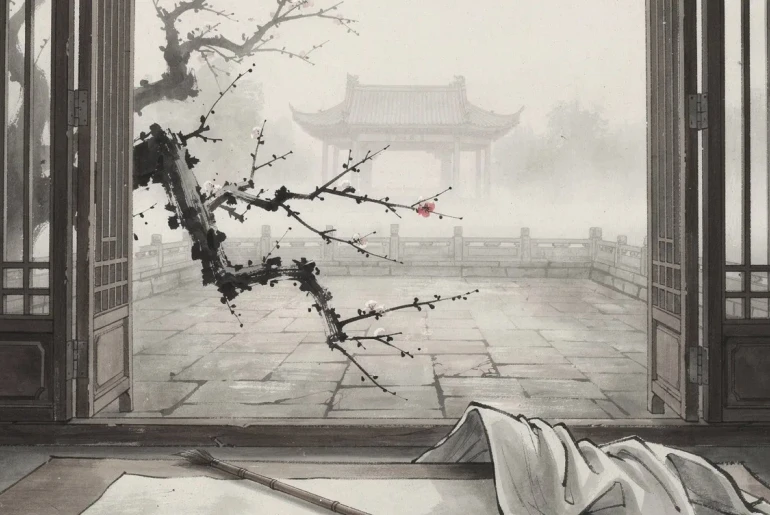
Receiving this hexagram in a deception question often means the answer you need is not in his phone or his calendar but in your own capacity to recognize what rings true and what does not. The hexagram is asking you to trust your perception, not your suspicion.
Those are not the same thing.
A third hexagram that surfaces in these readings is Oppression (Hexagram 47), lake over water, an abyss beneath a marsh that drains it dry. The judgment offers a hard piece of honesty: "The perseverance of the truly great man brings good fortune without error; but if he relies on words, no one will believe them." When this hexagram appears, it often describes a dynamic where one person is talking and the other has stopped hearing.
The words have become useless. The hexagram is not saying who is lying. It is saying that the conversation you are having, the one where you ask and he explains, has run its course.
You need a different approach.
What to do in the next ten minutes
Close the browser tab where you were searching his name. Put down the phone. Take the paper where you wrote your stripped-down question and read it aloud once, slowly. Then fold the paper and put it in a drawer. The I Ching reading you cast after that will be clearer because you have separated the question from the spiral.
The casting process itself is straightforward. Go to the site, focus on the question you wrote down, and cast. When the hexagram appears, read the judgment text and the image first, before the line readings.
Ask yourself one question only: what does this hexagram say about the forces at work, not about the person you suspect. Write down three words from the judgment that strike you. That is your reading for today.
Tomorrow you can cast again, or you can act on what you saw. But today you have done the thing that suspicion prevents: you have moved from spinning to looking.
The I Ching is a tool for reflection. It does not diagnose, it does not predict with certainty, and it is not a substitute for the hard work of making a decision. One reading will not settle a relationship. It will give you a place to stand while you figure out what you actually know.
Is he cheating on me?
The I Ching will not answer this question directly because it does not report on other people's hidden actions. What it can do is show you the shape of the relationship you are actually in. When you cast on this question, look at whether the hexagram describes a closed or an open dynamic.
Divorcement (Hexagram 12) describes heaven and earth estranged, communication cut off. That is a structural problem whether infidelity is present or not. A reading that shows Divorcement is telling you the relationship has stopped functioning, and that is the fact you need to address first.
Can I trust them?
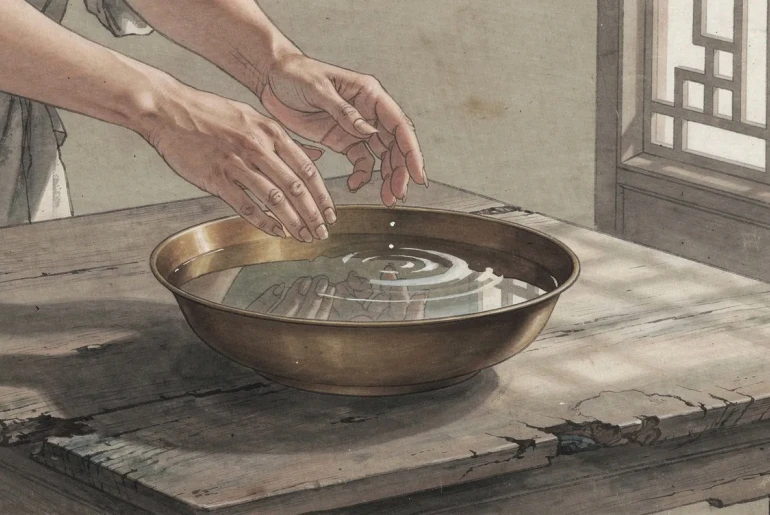
Trust is not a single switch. The I Ching helps you break it into pieces. Cast a reading on a specific domain: trust with money, trust with information, trust with your wellbeing.
Holding Together (Hexagram 8) asks you to examine your own foundation first: "let the querent re-examine himself by divination whether his virtue is great, un-intermitting and firm." Trustworthiness in another person is often visible only when you are standing on solid ground yourself.
Is there someone else?
This question narrows the lens to a third party, but the I Ching reads systems, not individuals. When this is the real question beneath the suspicion, the reading often returns a hexagram about division or competition. Disunion (Hexagram 38), fire over lake, describes two elements that do not mix.
The judgment is blunt: "Despite Mutual Alienation there will be success in small matters." The relationship has become two separate projects. Whether a third person is involved or not, the unity is already gone.
What are his true intentions?
Intentions are internal and invisible. The I Ching shows behavior patterns, not motives. Cast your question as "What is the direction of this person's actions" and watch for hexagrams about movement. Retreat (Hexagram 33) shows a mountain under heaven, a dignified withdrawal. If this hexagram appears, the person is pulling back whether he says so or not. The action tells you what the words may not.
Why was I fooled by someone I loved?
This question is about your own perception, and the I Ching has a direct response in Enthusiasm, Self-deception (Hexagram 16). Thunder over earth, a sudden arousal that can carry you past your own judgment. The hexagram does not blame you.
It describes a state where enthusiasm overrides discernment. The practical takeaway is not self-criticism but a recognition that strong feeling and clear seeing use different faculties. You were not foolish.
You were moved.
Did they ever feel the same way?
The past is fixed, and the I Ching reads the present configuration. A better question for the oracle is "What remains of that connection now." The Well (Hexagram 48) speaks to what endures: "Although a town site may be altered, The Well remains the same." Some connections leave a source you can still draw from, even if the town around it has changed completely.
Other readings will show an empty channel. Either way, the answer addresses what you carry forward, not what someone else felt in a moment that is already gone.
The next step is to cast your own reading at https://iching.today/. Write your question first, strip out the adjectives, and let the hexagram show you the pattern. The suspicion may not resolve in one session, but the loop can stop long enough for something new to enter.