

Write down what you already know before you cast
A cast about a family worry goes wrong when it starts from a blank page. Before you open a reading, take a note and write three lines. Line one is an observation with a date: "She mentioned the stairs twice on September 6." Line two is a fear you have not said out loud: "I think he is drinking again." Line three is what you have already tried: "I called on Tuesday. He did not pick up. I left a message."
Those three lines do two jobs. They separate what you saw from what you concluded, which is the difference between a fact and the story you tell yourself at 11 p.m. They also give the cast something to work against. A reading that lands on a written observation can be checked in a month. A reading that lands on a mood cannot.
- What I observed, with a date attached
- What I fear, in one sentence
- What I already tried, and what happened next
Word the question around your own next move
Most questions people bring to this situation ask for a fact about someone else. "How is my parent really doing?" is a real question, but no cast answers it. What a cast can do is answer a question about your next move.
Rewrite it. "What is mine to do about my father this month?" works. "What should I stop doing about my brother?" works better. Both are answerable because both are about your behavior, not his.
Notice the second one. Questions about stopping are often more useful than questions about starting, because the thing you are doing that is not working is usually the thing you cannot see from inside it. A reading that names a habit you did not know you had is worth more than a reading that confirms a plan you already made.
The Family (Hexagram 37) points at the structure, not at the person
When a family worry is the subject, The Family (Hexagram 37) comes up often. In James Legge's translation, its Judgment reads, "For the regulation of The Family, what is most advantageous is that the wife be firm and correct." The line is about the household as an arrangement, not about any one member's private life.
For your decision, that means the reading is asking about roles and boundaries. Who calls whom, who pays for what, who is expected to drop everything. If you drew this hexagram about your sibling, the question it puts back to you is not how to fix him but what you have agreed to carry that was never yours.
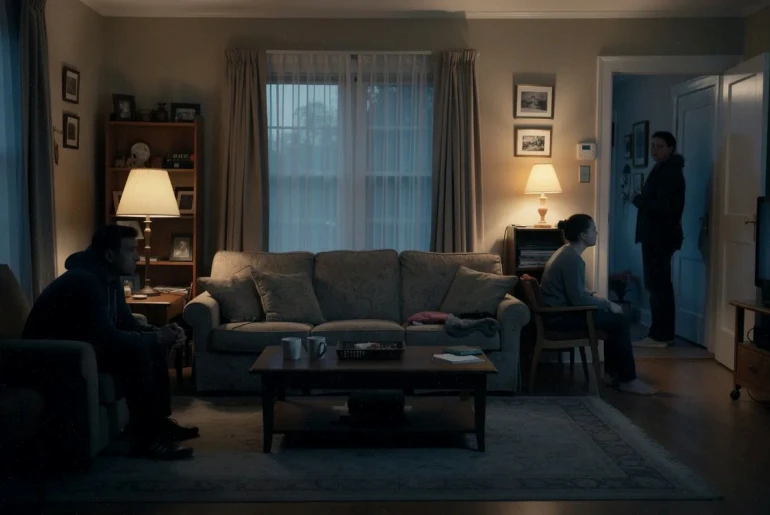
The Image adds a second half: the superior man speaks the truth and is consistent in his behavior. Consistency here is small and repeatable. The same call on the same day of the week. The same answer every time you are asked for money you cannot give. Not a dramatic intervention, and not a family meeting that ends in tears.
The Magnetic (Hexagram 2) describes support that does not push
The Magnetic (Hexagram 2), often called The Receptive, is the hexagram of the person who sustains rather than initiates. Its Image reads: "The capacity and sustaining power of the Earth is shown in The Magnetic. The superior man supports men and things with his large virtue."
For a parent who is getting older, this is the useful half of the reading and the harder half to accept. Support means the ride to the appointment, the groceries in the fridge, a good doctor's name written on a card. It does not mean the decision about the house, which is still theirs to make, even when you can see the mistake coming from a mile away.
The Judgment is blunt about where your effort stops paying. Taking the initiative leads you astray; following finds the proper lord. If you drew this hexagram about your mother's care, the reading is telling you to follow her lead on the parts that are hers, and to be firm about the parts that are yours, which are almost always the practical ones.
Waiting (Hexagram 5) covers the months when nothing moves
Waiting (Hexagram 5) is what comes up when you have done the obvious thing and the situation has not changed. Its Judgment treats sincerity and firmness as the conditions for progress, and it says plainly that crossing the great stream is still available to you.
Read that as permission to stop refreshing the situation. Sincerity means you keep the line open without demanding a reply. Firmness means you keep your own commitments, the rent, the job, the sleep. The great stream is whatever the next real step is, and it arrives when it arrives, not when you decide it should.
The Image is stranger and more useful than it first looks. It shows a person eating, drinking, and enjoying himself as if there were nothing else to occupy him. That is not advice to be careless.
It is a picture of someone who has done what can be done and refuses to spend the waiting time in dread. If you drew this hexagram, the reading is asking what you will do with the hours you currently spend rehearsing a conversation that has not happened yet.
What you can do in the next ten minutes
Open a note on your phone. Write the three lines: observation, fear, what you tried. Then rewrite your question so the only verb that matters is yours. If it still contains the words "make him" or "get her to," it is not finished.

Then send one message that asks something specific instead of "how are you." Name the thing you noticed. "You mentioned the stairs twice. Is the second floor getting hard?" A specific question is harder to answer with a reassurance, and a reassurance is usually what you get when you ask a general one.
Keep the page. When you cast, write the hexagram number and the date next to your three lines, and read the answer against them rather than against your mood.
The I Ching is a tool for reflection. It does not tell you what will happen to your parent, your sibling, or your children, and it is not a substitute for medical or legal advice. What it offers is a structured way to look at your own next move.
How is my parent really doing?
A cast will not tell you, and neither will a phone call in which you accept the first "fine." What you can do is ask about one specific thing you observed and then stay quiet for ten seconds after the answer. If you drew The Well (Hexagram 48), the reading is about what stays constant while the town moves, which for a parent often means the relationship outlasting the address.
How do I help my sibling?
Separate the help he asked for from the help you want to give. Discipline (Hexagram 7) ties good fortune to a leader of age and experience, which in a family is often someone other than the person in trouble, and sometimes someone other than you. If you are the only one stepping in, widen the circle before you increase your own load.
Will I have children?
No cast answers a question about fertility or timing, and anyone who says otherwise is selling something. What you can cast is the decision in front of you this month: whether to start, whether to stop, how to talk with a partner. Gradual Progress (Hexagram 53) appears here often, and its Judgment ties good fortune to a slow, correct advance rather than one decisive move.
Will I get to see my children?
This one is usually about arrangements that are partly in another adult's hands. Holding Together (Hexagram 8) asks you to re-examine your own steadiness before asking who will join you. Practically, that means the calendar: fixed days, confirmed in writing, kept even in a difficult month. Consistency is the part you control, and it is the part children remember.
When you are ready to put the question to the text, cast a free reading at https://iching.today/.